Could live streaming sword custom builds enhance customer trust and interest?

Each classic samurai blade stands a impressive example of fabrication, but suppose you long for to reveal your exclusive aesthetic? Altering your sword is a insightful journey, allowing you to create a truly uncommon piece. From the grip wrapping and binding to the guard design and tempering curve, each aspect offers a chance for tailored look. This study delves into the territory of katana alterations, providing information for both beginners and proficient enthusiasts desiring to make their signature on the heritage art of the samurai.
Newcomer's Original Mastery
For individuals excited to embark on the advantageous journey of katana handling skills , 1060 steel katanas present an ideal entry point. This defined grade of essential steel strikes a nice compromise between value and proficiency. While never as hard as upper-echelon steels, 1060 facilitates a moderate level of whetting, making it appropriate for learners to develop the rudiments of blade preservation and appreciate the elegance of handcrafted Japanese weaponry. It’s a excellent choice for acquiring experience without the capital burden of more elite steels.
T Gear Steel Weapons : Combining Potency and Affordability
For hobbyists seeking an authentic sword experience without exceeding the budget , T10 alloy katanas represent a appealing option. These daggers offer a substantial improvement in durability compared to middling alternatives, exhibiting reasonable edge retention and fair flexibility for initial slashing techniques. While not rivaling the eminent characteristics of advanced steels like T100 or folded material , T10 provides a worthwhile blend of performance and affordability , making them a popular choice for apprentices and those on a narrow revenue .
Surpassing the Steel : Customizing Your Tool's Accessories and Shaft
Even though the honed sharpened metal is undeniably the key point of a katana, truly amplifying its aesthetic lies in the exact customization of its accessories and handle . This process allows owners to reveal their personal character. Contemplate the wide possibilities: menuki - decorative trinkets that offer visual focus; the hamon casings – often carefully engraved ; the tsuka center itself, wrapped in traditional ito rope ; and the fusa butt cap , which can be constructed from various components like valuables or ivory .
- Pick styles that match with you.
- Test with distinctive elements .
- Prioritize superiority for a lasting influence .
The Fascination of the Katana: Origins, Mastery, and Material
Every nihonto exhibits a unique allure, steeped in periods of Far Eastern history and custom . More than merely a artificial item of skirmishing, it's a embodiment of the soldier ethos – a fusion of prowess and restraint . Its maturation spanned score generations, with early steel evolving into the polished curvature and precise edge we acknowledge today. The fabrication involved is truly phenomenal , requiring epochs of training to conquer . The process involves a elaborate folding of metal bloom, creating layers that enhance the cutting edge’s flexibility and hacking ability. Assorted schools of forging emerged , each with their specific secrets and procedures for achieving the flawless balance and keenness - a truly demanding pursuit.
- Primary Katana varieties
- The responsibility of the historical weapon in champion culture
- Traditional forging processes
Deciding the Appropriate Steel for Your Bladed Weapon Project: 1060 vs. T10
Opting for the ideal steel is vitally important for any armament project, and the conclusion between 1060 and T10 can be intricate. 1060 is a frequented American alloy, offering a reasonable balance of durability and robustness, providing it quite easy to temper. However, T10, a originating from Japan steel, usually boasts superior wear resistance and can perhaps achieve a elevated decisive hardness, although it can be significantly hard to manage and requires careful heat processing. Consider your experience level and aimed features: for a inexperienced, 1060 may be a clearer basis, while the samurai sword skilled smith might appreciate the increased traits of T10.
- Facility of Managing
- Surface
- Final Stiffness
Unlocking the Potential: Advanced Katana Customization Techniques
Mastering the art of katana alteration extends far beyond basic finishing. Serious smiths are now analyzing advanced techniques to truly activate a blade's hidden potential. This entails intricate work with the heat signature, utilizing specialized products for differential heat treating and carefully nominating the contour of the hand guard to optimize balance and functionality. Beyond purely functional changes, artisans are increasingly focused on achieving unparalleled aesthetic elegance, through complex carving and layered glazes that truly transform a katana into a showpiece.
Shaping Rough Steel into Perfection: Making a 1060 Sword
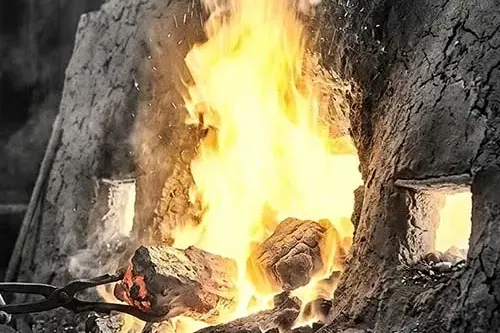
The journey starts with average 1060 metal , a strong material far away the deluxe katana it will evolve . Proficient bladesmiths utilize a sophisticated process of layering and forming the raw steel, repeatedly burning it and flattening it to discard impurities and build a even grain structure. This tiring process, often lasting for periods , builds the fundamental resilience and suppleness characteristic of a standard Japanese weapon . Supplementary heat treatments , including exact hardening and curing , are critical to achieve the specific proportion of sharpness, stability and grace .- Combining: Diminishes impurities and creates grain structure.
- Molding: Builds the steel into the initial blade form.
- Annealing: Establishes the final hardness and flexibility.
The Perpetual Attraction of the Katana: Extensive Study of Steel and Alteration
Every classic katana persists a forceful symbol signifying Japanese folklore, its appeal far moving past mere arms . Forged from exclusive steel and periodically featuring intricate details , the system of creation itself is a celebrated art. Beyond the fundamental craftsmanship, the ability to customize a katana - from the blade pattern to the handle wrapping and band - permits for a perfectly individual manifestation for both supporters and operators alike. This union of legacy steelwork and boundless personalization brings the katana's continued presence across the realm .