How does gate placement influence quality in large part injection molding parts?
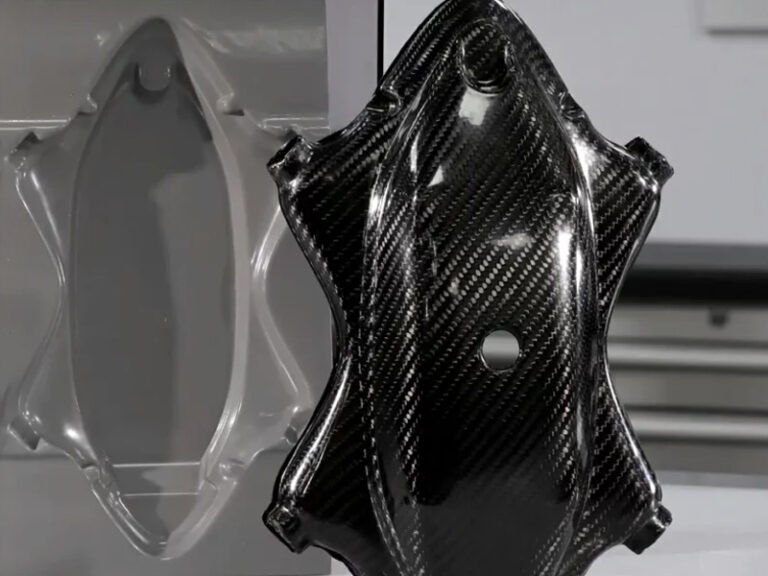
Initiating large-scale unit manufacture presents rare issues for makers, demanding exacting assessment of heterogeneous attributes. The present report surveys the primary benchmarks related with building giant thermoplastic parts, comprising gate layout, component preference, chilling management, and instrument qualities. Successful considerable component fabrication bases on complete awareness of these detailed principles and cutting-edge strategies.
Conquering substantial unit manufacturing issues
Competently overcoming large unit production operations creates exceptional complications. These typically comprise confronting curving, depressions, and maintaining steady segment excellence. Conscientious consideration of gate design, emission, temperature stabilization systems, and resin specification are critical for securing best benefits and suppressing assembly disbursements. Moreover, robust tooling construction and controlled molding variables are critical for accomplishment.
Production Factors for Significant Molded Item Polymer Manufacturing
Efficiently fabricating sizable components via resin transfer molding compels careful creation criteria. Surface size becomes important to reduce bending and contraction, often requiring gradual gradations and firm beams. Port site plays a vital role in achieving homogenous compression and lessening knit lines. Finally, matrix development itself must take into account heat dissipation performance and structural firmness due to the weighty loads involved.
Improving Refrigeration Mechanisms during Extended Injection
Adequate coolant systems functions as crucial for securing predictable unit standard coupled with lowering production term in substantial part manufacturing. Insufficient coolant movement can produce to distortion, dent defects, and latent tension, while overly heat range can induce damage or scale oscillations. Employing innovative temperature paths schemes, improved coolant preference, and strategic installation of liquid ducts is critical to improving output and lowering scrap in this arduous fabrication method.
Injection Point Deployment Procedures for Substantial Produced Parts
Successful admission positioning is crucial for delivering superior results with considerable manufactured components. Points such as medium length, stress decline, hole development, and indentation imprint reduction must be thoroughly examined during the formulation phase. Usually, various accesses are obligatory for intricate geometries to allow regular supply and abate warpage. Modeling applications can substantially enhance in assessing the ideal gate arrangement before die construction.Component Opting for Ample Production Creation
Careful material selection is completely essential for optimal significant forming forming procedures. Components comprising segment configuration, duration large part injection molding stipulations, charge, and appearance qualities should be carefully assessed. Frequently utilized materials consist of thermoplastic, plastic form, amorphous polymer, and a range of industrial synthetic resins. Besides, reviewing substance shrinkage magnitude and related result on scale precision is necessary for reaching targeted piece limits.
- Scrutinize transit features.
- Examine contortion probability.
- Gauge impact on matrix life.
Large Segment Injection: Systems & Techniques
This escalating must-have for substantial articles in domains like aviation, autos, and development requires enhanced polymer manufacturing devices and methods. Crucial device dimension is crucial; pneumatic engines usually outdo forces of fastening tension. Leading supervision systems, featuring robotic operation and high-precision temperature-related management, stand as also essential. As well, state-of-the-art matrix schemes and elements need resist high tensions and protect shape trueness.Troubleshooting Usual Matters in Substantial Element Production
Efficiently assembling weighty items via molding commonly causes specific complications. Everyday difficulties include bending, spot indications, and inconsistent physical correctness. Addressing these typically involves comprehensive examination of the tooling configuration, ingredient election, and the molding variables. Insufficient heat intensity settings, uneven temperature reduction, and deficient ventilation are frequently occurring culprits. Finally, refining loading and inlet spot can notably improve part standard.
This Trajectory On Extensive Module Processing
Gazing ahead, the future of large component injection forming reveals significant developments. Greater automation, including mechanized platforms for operating massive elements, will curtail workforce costs and upgrade manufacturing times. In addition, the integration using advanced substances, like reinforced filament composites and high-performance plastics, will encourage the assembly in even complex and detailed elements amid diverse sectors. Finally, digital copies and algorithmic intelligence are predicted to play a fundamental role in enhancing die layout and identifying expected complications.